 English

Views: 0 Author: Site Editor Publish Time: 2026-11-18 Origin: Site


Modern piping networks are the lifelines of industrial and commercial infrastructure. Whether in advanced climate control systems or high-pressure fluid transfer, the long-term reliability of these systems hinges on the integrity of their connections.
In high-stress environments, a mechanical link is often the primary point of failure. Engineers prioritize high-heat joining methods because they create a seal that becomes part of the piping structure itself. By utilizing precise thermal control and professional-grade Copper Fittings, this process transforms the joint into a robust section of the network.
This article breaks down the science behind this metal-joining process, explains why it remains the industry standard, and provides the best practices to ensure your installation stands the test of time.
Metallurgical Bond: The process melts a specialized filler that integrates with the base copper at a molecular level, often creating a joint with higher tensile strength than the piping material itself.
High-Pressure Resilience: Properly executed connections are engineered for systems facing extreme mechanical stress, effectively preventing the blowouts or fluid leaks that often plague commercial installations.
Extreme Durability: Unlike mechanical alternatives, high-temperature joints endure rapid thermal fluctuations and constant vibration without developing micro-cracks over decades of service.
Flawless Preparation: Success relies on strict adherence to field protocols, including precise mechanical cleaning, controlled thermal manipulation, and the use of internal nitrogen purging to maintain system purity.
To appreciate how high-heat joining protects infrastructure, look at the physical changes happening at the torch tip.
Brazing is a specialized process that heats the base copper above 840°F (450°C), while carefully staying below the 1,981°F (1,083°C) melting point of the metal itself. Technicians use a filler rod, typically a silver-bearing or copper-phosphorus alloy, to bridge the assembly gap.
The Role of Capillary Action
The secret to a perfect seal is capillary action. Once the base metal reaches the liquidus temperature, the filler alloy is drawn into the tight tolerance gap between the pipe and the fitting cup.
This action effectively defies gravity, ensuring a complete, hermetic seal around the entire circumference.
Brazing vs. Soldering
In contrast, a standard solder joint typically occurs well below 840°F. Because these low-heat methods utilize softer filler metals like tin, they lack the tensile strength required for high-pressure, industrial-grade protection.
As modern systems push toward higher efficiency, industry experts are increasingly moving away from basic soldering in favor of advanced, high-heat bonding to meet stringent safety requirements.
The intense heat and specialized alloys do more than fill a space; they alter the physical properties of the connection. This transformation is critical for several engineering reasons.
Seamless Metallurgical Integration
The process triggers atomic diffusion. The molten filler slightly dissolves the surface of the copper, fusing the two parts into a unified structure. This prevents the joint from shearing under physical loads that would break a simple adhesive or pressed connection.
Managing Thermal Expansion
Modern HVAC units cycle between extreme temperature shifts. Because the filler alloy shares a similar coefficient of thermal expansion with copper, the joint expands and contracts in unison with the pipe. This uniformity eliminates the stress fractures commonly found in mismatched materials.
Gas-Tight Integrity
In the HVAC sector, the push for low-GWP refrigerants has forced a shift toward higher operating pressures. A high-heat joint provides a hermetic seal so tight that even pressurized, low-molecular-weight gases cannot find a path to escape.
Corrosion Prevention
Improperly sealed connections often feature microscopic crevices that trap moisture and flux residues, which leads to localized pitting. By filling these annular spaces completely, the process blocks corrosive agents from reaching the interior wall.
Mechanical Vibration Damping
Large-scale pumps and compressors generate continuous high-frequency vibrations. High-temperature joints offer a blend of tensile strength and slight ductility, allowing them to dissipate this vibrational energy instead of snapping under fatigue.
Modern cooling systems operate under increasingly harsh conditions, making the piping connection a matter of system survival.
Refrigeration Tubing must withstand pressures that would cause standard residential water lines to fail instantly. Industry trends are shifting toward systems using R-290 or CO2, which can operate at transcritical pressures exceeding 1,400 PSI. In these environments, an absolute hermetic seal is a regulatory mandate rather than a preference.
Furthermore, the installation process protects the compressor, the most expensive component in the system. Flowing nitrogen through the lines prevents the formation of cupric oxide, an abrasive soot that can destroy bearings if it enters the refrigeration cycle.
While the entire piping network relies on quality joints, specific components face unique stress profiles.
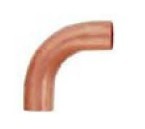
An Elbow, for example, is a primary point of fluid turbulence. When high-velocity gas changes direction, it creates localized pressure spikes against the outer wall of the fitting. A deeply penetrated, structurally sound bond at these directional changes is essential for anchoring the component against thrust forces.
Different connection methods offer distinct advantages depending on system requirements.
Connection Type | Primary Benefit | Ideal Use Case |
|---|---|---|
High-Heat Brazing | Superior Tensile Strength | High-pressure HVAC/R, Gas Lines |
Standard Soldering | Low Cost, Quick Installation | Residential Potable Water |
Press Fittings | Labor Efficiency | Accessible, Low-Pressure Lines |
When configuring complex networks with tees, couplings, and reducers, engineers should always specify precisely machined fittings. These components ensure a uniform gap, which allows capillary action to function at peak efficiency.
The protective benefits of a metallurgical bond depend entirely on the technician’s process. Even high-quality materials will fail if the field execution is sub-par.
Surface Preparation
Capillary action requires a pristine, oxide-free surface. All copper ends and fitting interiors must be cleaned with an abrasive pad until the metal is bright. Burrs must be reamed away, as they disrupt smooth flow and create internal turbulence.
Nitrogen Purging
Nitrogen should be flowed at low pressure through the piping during the entire heating process. This simple step displaces oxygen, preventing the "black soot" oxidation that clogs expansion valves and harms compressors.
Thermal Control
Masterful torch control is the hallmark of a skilled technician. Heat should be applied to the tube first to bring it to a dull cherry red before transferring the focus to the fitting. This draws the alloy deep into the connection.
Even experienced teams can overlook critical details that compromise system integrity. The most common errors include:
Overheating the Base Metal
Excessive heat softens the copper, drastically reducing its burst pressure rating. This process, known as over-annealing, leaves the pipe structurally compromised.
Cold Joints
If the base metals are not brought to the proper temperature, the filler alloy will ball up on the surface rather than penetrating the gap. This "cold joint" is an aesthetic illusion that will inevitably leak under vibration.
Excessive Filler Application
There is a misconception that a large external bead of filler increases strength. In reality, strength is derived from the metal inside the cup. Excess material inside the pipe can cause severe flow restrictions and blockages.
Achieving a high-quality joint is both an industrial science and a mechanical art. By choosing the right materials and adhering to strict installation standards, you transform individual components into a durable, integrated system.
Investing in professional-grade connections saves significant costs on long-term maintenance and ensures your infrastructure delivers reliable performance for years to come.
For your next mechanical installation, prioritize quality and precision to ensure the longevity of your network.
The primary difference is the temperature and the resulting bond. Soldering happens below 840°F, creating a surface adhesion, whereas the higher-temperature process occurs above 840°F. This high-heat method forms a distinct metallurgical alloy, making it far superior for high-pressure and high-vibration applications.
When joining copper to copper with phosphorus-bearing filler metals, flux is often unnecessary because the phosphorus acts as a cleaning agent. However, when joining dissimilar metals, such as copper to brass or steel, a high-temperature flux is mandatory to prevent oxidation and ensure the filler adheres correctly.
Leaks in couplings or directional fittings are usually caused by installation errors. Common culprits include inadequate cleaning, failing to reach the proper temperature for capillary action, or neglecting to purge the lines with nitrogen, which results in internal oxidation.
Flowing oxygen-free nitrogen prevents the inside of the copper pipes from oxidizing when exposed to the intense heat of the torch. This keeps the internal system perfectly clean, protecting sensitive components like compressors and expansion valves from abrasive debris.
Yes. Overheating leads to over-annealing, which makes the copper soft and reduces its overall pressure rating. Additionally, applying too much filler metal increases the risk of the molten alloy running inside the pipe, which can cause internal blockages and flow resistance.


