 English
Views: 0 Author: Site Editor Publish Time: 2026-09-02 Origin: Site


Are skyrocketing energy bills and spoiled inventory ruining your facility's profit margins? A poorly matched refrigeration system is often the silent culprit behind these costly operational failures. When the mechanical components of a cooling system are out of sync, the result is rapid equipment degradation, excessive power draw, and unstable storage temperatures.
To extract maximum value and reliability from modern commercial cooling setups, engineers must perfectly balance three critical variables: the compressor's horsepower (HP), the specific chemical refrigerant, and the target evaporating temperature. This comprehensive guide details the precise technical steps required to harmonize these elements for your specific thermal load requirements, ensuring your equipment runs at peak efficiency.
Evaporating Temperature Dictates System Design: The evaporating temperature must typically be engineered 5°C to 10°C (9°F to 18°F) lower than the desired ambient temperature of your cold storage space.
Refrigerant Choice Alters Capacity: Different chemical refrigerants operate under distinct pressure-temperature profiles. This directly changes the volumetric efficiency and overall thermal extraction rate of the system.
Horsepower is a Dependent Metric: Compressor HP should never be estimated in isolation. It must be mathematically derived after determining the specific cooling load (in kW or BTU), the target evaporating temperature, and local ambient conditions.
Engineering Synergy: A meticulously matched system ensures optimal electrical efficiency, extends the mechanical lifespan of internal components, and maintains strict temperature stability for stored goods.
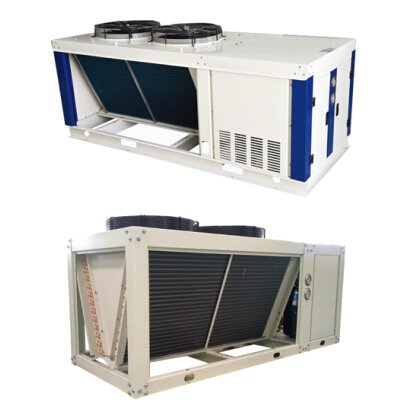
A box-type condensing unit is a fully enclosed, compact refrigeration powerhouse. It securely houses the primary mechanical components—including the compressor, condenser coil, axial fans, and electrical controls—within a weather-resistant, acoustically insulated metal casing. This design differs significantly from traditional open-type skids, which expose delicate components to environmental degradation and emit disruptive noise levels.
For modern commercial applications, these enclosed systems provide substantial operational advantages. Picture a bustling supermarket rooftop or a restaurant alleyway. The galvanized or powder-coated steel casing protects internal components from rain, dust, and corrosive urban elements, drastically extending the equipment's lifecycle. Furthermore, the acoustic insulation significantly reduces decibel output, making these units compliant with strict municipal noise regulations.
Because of their versatile footprint and protective housing, they are frequently deployed as a highly reliable cold room refrigeration unit in pharmaceutical logistics hubs, food processing plants, and retail walk-in coolers. They streamline the installation process by requiring less on-site assembly while offering an aesthetically pleasing exterior that integrates seamlessly into commercial building facades.
In commercial refrigeration engineering, system performance relies entirely on a delicate balance between three variables. This relationship operates much like a mechanical triangle; altering one variable fundamentally shifts the operational parameters of the other two. You simply cannot swap a component without triggering a thermodynamic domino effect.
The evaporating temperature dictates the exact amount of thermal energy the system must absorb from the room. Meanwhile, the refrigerant acts as the thermal transfer medium, carrying this heat away based on its specific molecular properties. Finally, the compressor HP represents the mechanical muscle required to compress and move that specific refrigerant vapor at the designated pressure.
Looking at recent industry trends, there is a massive shift towards precision load matching in commercial cooling. As global energy regulations tighten (such as the European F-Gas regulations and updated DOE standards) and electricity costs soar, refrigeration engineers are abandoning the outdated practice of installing oversized, legacy systems "just to be safe." Current market analysis reveals a heavy reliance on dynamically matched components utilizing low-GWP refrigerants. This modern approach not only reduces carbon footprints but also equips systems to handle extreme ambient temperature spikes—a crucial adaptation for contemporary climate challenges.
The foundational step in matching refrigeration components is establishing the correct evaporating temperature. A widespread engineering error is equating the cold room's target air temperature with the evaporating temperature. In reality, heat transfer requires a thermal gradient. The refrigerant bubbling inside the evaporator coil must be significantly colder than the surrounding air to absorb heat effectively.
This thermal gradient is known as the Temperature Difference (TD). Standard refrigeration design dictates a TD of 7°C to 10°C. The specific TD selected also impacts the relative humidity of the space. For instance, a butcher shop storing fresh meat requires high humidity to prevent the product from drying out, so a smaller TD (e.g., 5°C) is ideal. Conversely, a warehouse holding sealed, packaged goods benefits from a larger TD (e.g., 10°C), which pulls more moisture from the air.
To select the correct equipment, field technicians categorize the required evaporating temperatures based on the specific application. Locking in this precise metric is an absolute prerequisite before you even look at a compressor performance catalog.
Application Type | Target Room Temp | Design Evaporating Temp | Typical Humidity Needs |
|---|---|---|---|
Prep Rooms / Chillers | +8°C to +12°C | 0°C to +5°C | Medium (Large TD) |
Standard Cold Rooms (Produce/Meat) | 0°C to +5°C | -5°C to -10°C | High (Small TD) |
Walk-in Freezers | -18°C to -25°C | -25°C to -35°C | Low (Moisture not an issue) |
Refrigerants are not universally interchangeable fluids. Each chemical compound possesses a unique Pressure-Temperature (PT) curve. Once the evaporating temperature is defined, your chosen refrigerant dictates the exact suction pressure the compressor will experience. The density of the refrigerant vapor at that specific pressure determines the mass flow rate, influencing the compressor's required displacement.
When specifying systems, the choice of gas fundamentally alters the hardware requirements. For example, an R404A condensing unit remains a dominant standard for low and medium-temperature commercial freezing. It offers excellent cooling capacity and maintains stable discharge temperatures even during deep-freeze cycles. Because its vapor is relatively dense at low temperatures, it provides superior volumetric efficiency.
In contrast, legacy infrastructure often still relies on older technology. An R22 condensing unit operates under entirely different thermodynamic pressures and utilizes mineral oil, unlike the synthetic POE oils required for modern blends. While R22 is undergoing global phase-out under environmental protocols, maintaining existing systems requires explicit matching. You cannot simply drop modern gas into an older system without verifying that the compressor's motor can handle the altered pressure profile.
Modern engineering also requires factoring in Global Warming Potential (GWP). Alternatives like R448A or R449A are frequently utilized to replace older gases. However, these blends exhibit "temperature glide"—meaning they evaporate over a range of temperatures rather than at a single point. Engineers must account for this glide when calculating the midpoint evaporating temperature to accurately match the compressor's capacity.
A dangerous misconception in the HVAC/R industry is treating Horsepower (HP) as a direct measurement of cooling capability. In reality, HP merely quantifies the electrical power consumption of the compressor motor. To match a system properly, you must first calculate the actual heat load of the cold room in Kilowatts (kW) or British Thermal Units (BTU/hr).
This calculation requires a rigorous assessment of the product load (the heat removed from the goods), transmission load (heat leaking through insulated panels), infiltration load (warm air entering when doors open), and internal loads (heat generated by fans, lights, and forklifts). Only after establishing the total required kW or BTU/hr can you determine the necessary mechanical power.
Once the total thermal load is calculated, engineers must consult the manufacturer’s specific compressor performance charts. These tables require three distinct data points to find the correct HP: the chosen refrigerant, the required evaporating temperature, and the maximum local condensing temperature.
By cross-referencing these three metrics, you locate the compressor model that delivers the exact kW/BTU capacity needed. For instance, a standard 5 HP compressor running R404A at a -10°C evaporating temperature might yield 10 kW of cooling capacity. However, if that exact same compressor operates at a -30°C evaporating temperature, the vapor becomes highly expanded and less dense, causing the cooling capacity to plummet to just 4 kW. Therefore, selecting an air cooled condensing unit based solely on a "5 HP" label guarantees catastrophic system failure.
While standard hermetic scroll or rotary compressors are highly efficient for light to medium commercial applications, industrial environments frequently demand more robust mechanical solutions. When a facility operates a blast freezer running 24/7, upgrading the internal components to a semi hermetic compressor unit becomes a technical necessity.
Unlike fully welded hermetic compressors that must be discarded if they fail, semi-hermetic models feature a bolted cast-iron housing. This allows for field dismantling, inspection, and repair of internal components like valve plates and motor stators. This repairability provides a significantly lower total cost of ownership over a 20-year lifespan in heavy-duty environments.
Specifically, semi-hermetic designs handle severe operational variances more effectively. When operating at ultra-low evaporating temperatures, the returning suction gas is often too sparse to adequately cool the compressor motor. Semi-hermetic architectures accommodate strict matching requirements by allowing the integration of supplemental motor cooling accessories, such as dedicated head cooling fans, ensuring the motor windings never exceed safe thermal limits.
Even with access to accurate data, sizing errors frequently occur during the specification phase. Field engineers frequently encounter these empirical mistakes. Avoiding them is critical for maintaining system integrity and preventing premature breakdowns.
Ignoring Ambient Temperature Variations: The condensing temperature is intrinsically linked to the outside air. Failing to adjust the required compressor capacity for the hottest days of the year results in severely undersized equipment. A system designed for a mild 32°C ambient environment will suffer high-pressure trips and severe capacity loss if installed on a scorching rooftop that regularly reaches 43°C.
Using the "Rule of Thumb" for HP: Many inexperienced technicians guess compressor HP based strictly on the square footage of the cold room. This ignores the specific heat capacity of the stored product, the thickness of the insulation, and the required pull-down time. HP must always be derived mathematically from the exact thermal load.
Mismatching the Expansion Valve (TXV): The Thermal Expansion Valve regulates the flow of liquid refrigerant into the evaporator. A common error is sizing the TXV based on the copper line size rather than matching it to both the specific refrigerant and the exact capacity of the compressor at the design evaporating temperature. An oversized TXV leads to erratic hunting and liquid slugging, while an undersized TXV starves the evaporator.
Swapping Refrigerants without Checking Limits: Due to regulatory phase-outs, facility managers sometimes drop a modern replacement gas into an older system. Doing this without verifying the compressor's displacement, motor HP, and oil compatibility is a critical error. The higher operating pressures of modern refrigerants can quickly exceed the mechanical limits of older compressors, resulting in immediate motor burnout.
The structural appeal and compact footprint of a box-type unit are only as valuable as the thermodynamic engineering behind it. Successfully maintaining precise cold room temperatures requires treating the system as an integrated, breathing whole. By rigorously calculating the required cooling load, establishing the correct evaporating temperature, selecting the appropriate refrigerant, and subsequently matching the compressor HP to those exact parameters, you ensure optimal efficiency and mechanical safety.
Stop letting mismatched equipment drain your operational budget. Whether you need a high-efficiency scroll system or a robust semi-hermetic setup, precision engineering is non-negotiable. Explore our full range of custom-matched solutions at Retekool, and find the exact condensing unit engineered for your facility's unique thermal dynamics.
Generally, no. From a thermodynamic and mechanical standpoint, R404A operates at significantly higher pressures than R22 at identical temperatures. An R22 compressor is engineered with specific volumetric displacement and motor torque designed for lower pressure environments. Using an older compressor for modern high-pressure gas without proper manufacturer approval and retrofitting will lead to severe motor overload, excessive discharge temperatures, and ultimately, catastrophic mechanical failure. Additionally, the lubrication oils are fundamentally incompatible.
The required evaporating temperature is determined by subtracting a specific Temperature Difference (TD) from your desired cold room temperature. In standard commercial refrigeration engineering, this TD is usually between 7°C to 10°C (12.6°F to 18°F). For example, if your target room temperature is 2°C (35.6°F), your evaporating temperature should be engineered to operate between -5°C and -8°C.
This phenomenon is governed by the principles of thermodynamics and the specific volume of gases. As the evaporating temperature drops, the corresponding suction pressure also decreases. At lower pressures, the refrigerant vapor expands and becomes less dense. Because the compressor has a fixed physical displacement, it pumps less actual mass of refrigerant when the gas is expanded. Since cooling capacity is directly proportional to the mass flow rate, pumping less mass results in a lower capacity to absorb heat.
While the vast majority of these units are manufactured as air-cooled systems due to their primary application in outdoor, rooftop, or well-ventilated warehouse installations, they are not exclusively air-cooled. Air-cooled variations are favored for their ease of installation. However, for specific industrial applications—such as indoor installations with poor ventilation or exceptionally high ambient temperature environments—manufacturers can engineer water-cooled variations within a similar protective casing.
Calculating the cooling load requires summing up four distinct heat sources. First, calculate the transmission load (heat bleeding through walls, floor, and ceiling). Second, calculate the product load (the energy required to cool down the goods brought into the room). Third, account for the infiltration load (warm air entering during door openings). Finally, add internal heat loads generated by evaporator fans, lighting, and personnel. Once you have the total daily heat load in BTUs or kW, you can select a compressor that meets this exact thermal requirement at your design evaporating temperature.
An oversized compressor will cool the room too quickly, leading to short-cycling. This frequent starting and stopping causes severe wear on the compressor motor and electrical contactors, drastically reducing the equipment's lifespan. Furthermore, short-cycling prevents the evaporator coil from running long enough to properly dehumidify the space (or conversely, pulls too much moisture out too fast depending on the TD), leading to unstable humidity levels and potential frost buildup on products.


