 English
Views: 0 Author: Site Editor Publish Time: 2026-09-28 Origin: Site


The wrong cooling equipment can silently ruin an entire warehouse of inventory. Every year, countless facility managers face catastrophic product loss, severe frost buildup, and skyrocketing energy bills simply because they installed a mismatched refrigeration unit. Navigating the commercial cooling market often leaves buyers struggling to decipher the critical engineering differences between DL, DD, and DJ models.
In this comprehensive guide, we will demystify the technical specifications surrounding fin spacing, temperature ranges, and application scenarios. By the end of this breakdown, you will possess the exact engineering knowledge needed to select the perfect evaporator for your specific operational demands.
Before diving into complex thermodynamics, here is a quick-reference summary distinguishing the three main types of commercial evaporators:
DL Series (Fin Spacing ~4.5mm): Engineered specifically for high-to-medium temperature environments operating around 0°C. These units are the optimal choice for preserving fresh fruits, crisp vegetables, dairy products, and eggs.
DD Series (Fin Spacing ~6.0mm): Built for medium-to-low temperature storage at approximately -18°C. They serve as the industry standard for safeguarding frozen meats, seafood, and long-term frozen goods.
DJ Series (Fin Spacing ~9.0mm): Designed exclusively for ultra-low temperatures and harsh blast freezing applications ranging from -25°C to -35°C. They are mandatory for rapidly dropping the core temperature of fresh products.
The Golden Rule of Refrigeration: The lower your target room temperature, the wider the fin spacing required on your equipment. This prevents rapid, airflow-suffocating frost accumulation.
To make a financially sound purchasing decision, you must first grasp the fundamental mechanics governing commercial refrigeration cycles. Relying on guesswork during procurement often leads to expensive retrofits down the line.
Imagine walking into a commercial chiller where the external compressor is humming loudly, yet the indoor air feels stagnant and warm. That scenario represents a complete failure in heat exchange. In a functioning system, a high-quality cold room evaporator acts as the literal "lungs" of the insulated space. While the condenser sits outside to disperse extracted heat, the evaporator is mounted internally.
Its primary duty is continuous thermal transfer. As liquid refrigerant flows through the internal copper tubing, it absorbs ambient heat from the room. Simultaneously, high-velocity axial fans pull warm, moisture-laden air across the chilled aluminum fins. The refrigerant boils off, absorbing the heat. Crisp, chilled air is then blasted back into the room. Without this relentless cycle, maintaining a biologically safe thermal environment is physically impossible.
A dangerous misconception among new facility owners is that raw cooling capacity (measured in kilowatts) is the only metric worth evaluating. In reality, the nature of your inventory dictates vastly different atmospheric needs. For instance, freshly harvested mushrooms respire heavily. They release massive amounts of moisture, necessitating a stable 0°C environment. Conversely, stacking freshly processed poultry requires a strict -18°C hold to halt bacterial proliferation. Meanwhile, blast-freezing wild-caught tuna demands a brutal -30°C shock.
These fluctuating temperatures and humidity loads dictate exactly how water vapor interacts with the metal machinery. Applying a single, generic evaporator design to all these distinct scenarios guarantees severe mechanical strain. Thermodynamics become compromised, ultimately resulting in spoiled goods.
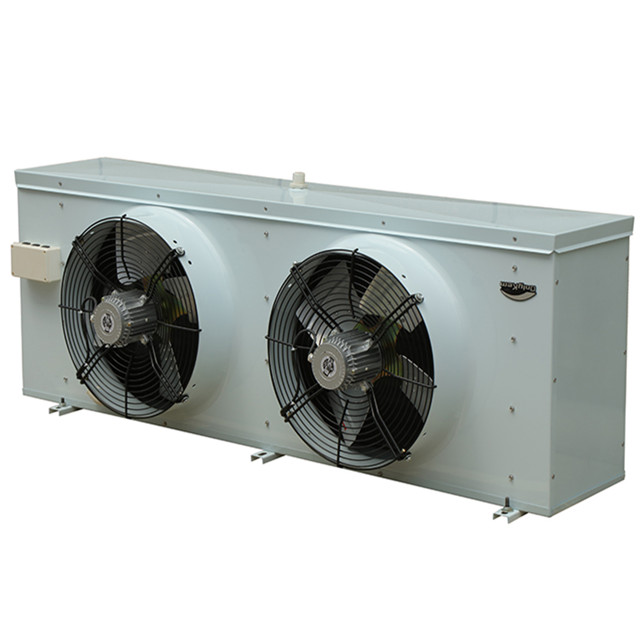
Beyond fan size or cabinet dimensions, the most critical engineering distinction between the DL, DD, and DJ series lies in a seemingly minor detail. That detail is fin spacing.
Fin spacing refers to the precise millimeter measurement between the vertical aluminum plates lining the evaporator coil block. These delicate fins exist to maximize the total surface area of the coil. Consequently, they facilitate a highly efficient heat transfer between the passing air and the internal refrigerant.
Warm, humid air constantly collides with sub-zero aluminum fins. When this happens, the moisture condenses and instantly freezes. Frost generation is an unavoidable physical reality of any refrigeration system operating below the dew point. However, frost is an excellent insulator. As it accumulates on the metal, it heavily restricts the narrow pathways meant for airflow.
If you deploy equipment with fins packed too closely together in a deep-freeze environment, frost will rapidly bridge the gap between the plates. This solid "ice bridge" acts like a brick wall. It completely blocks the axial fans from pulling air through the coil, causing heat exchange to cease entirely. The compressor will continue to run at maximum capacity, burning through massive amounts of electricity, yet the room temperature will inevitably rise. Therefore, a dedicated low temperature unit cooler must feature wider gaps to safely accommodate heavier frost loads between scheduled defrosting cycles.
The DL series represents the gold standard for medium-temperature refrigeration. It is heavily optimized for maximum cooling efficiency in environments where rapid, aggressive ice bridging is less of an immediate threat.
Standard Fin Spacing: 4.5mm
Target Temperature Range: +5°C to -5°C (Optimized specifically for 0°C)
Cooling Dynamics: Because the aluminum fins are densely packed just 4.5mm apart, this series offers a massive total surface area relative to its compact physical footprint. This density translates to exceptional heat exchange efficiency.
In practical terms, a DL air cooler is engineered for perishable commodities that must be kept thoroughly chilled, but never frozen.
Fresh Produce: Leafy greens, apples, and citrus fruits require temperatures hovering just above freezing to maintain cellular crispness and prevent rot.
Dairy and Eggs: Milk, artisanal cheeses, and eggs demand a highly stable 0°C to +4°C climate to prevent premature spoilage.
Pharmaceuticals and Prep Rooms: Medical storage facilities rely heavily on the stable, gentle cooling profile provided by the DL series.
The primary advantage of the tight 4.5mm spacing is unparalleled energy efficiency and cooling capacity for medium-temperature spaces. It cools faster while occupying less ceiling space. However, its greatest strength is also its fatal flaw if misused. Should a DL model be mistakenly installed in a -18°C freezer, those narrow 4.5mm gaps will freeze solid within hours. This suffocates the entire system and requires constant, labor-intensive manual defrosting.
When transitioning from fresh produce storage to long-term frozen preservation, thermodynamic stresses shift dramatically. Enter the DD series, widely considered the absolute workhorse of the global frozen food supply chain.
Standard Fin Spacing: 6.0mm
Target Temperature Range: -15°C to -25°C (Optimized for standard -18°C freezers)
Cooling Dynamics: The 6.0mm gap intentionally reduces the total number of fins on the coil block. While this slightly lowers the raw surface area compared to a DL unit, it creates a vital buffer zone for frost accumulation.
A properly specified DD air cooler is the universal standard for commercial freezer rooms.
Frozen Meats: Beef, pork, and poultry must be held strictly at -18°C to ensure long-term biological safety and structural integrity.
Frozen Seafood and Processed Foods: Commodities like frozen fish fillets, pre-packaged dumplings, and french fries rely entirely on DD units to maintain a deep, stable freeze.
Ice Cream Storage: Prevents the dreaded partial melting and refreezing cycle that causes gritty ice crystallization in dairy desserts.
At -18°C, any ambient humidity introduced by opening facility doors instantly turns to ice upon hitting the coils. The 6.0mm spacing strikes an elegant engineering balance. The gap remains wide enough to allow a normal, healthy layer of frost to form without choking off the airflow. Specifically, this precise spacing allows the machinery to run efficiently for 6 to 8 hours straight before an automatic defrost cycle is triggered to melt the accumulated ice.
Blast freezing is not merely storage; it is a violent thermodynamic process. It involves taking fresh, ambient-temperature products and forcing them into a solid frozen state in the absolute shortest time possible. This extreme application requires highly specialized, heavy-duty machinery.
Standard Fin Spacing: 9.0mm
Target Temperature Range: -25°C to -35°C (and frequently below)
Cooling Dynamics: The DJ series features aggressively spaced fins designed to endure extreme environmental stress. Furthermore, the axial fans are typically high-velocity models built to force sub-zero air deep into densely packed product pallets.
If your operational goal involves rapid temperature reduction, utilizing a DJ air cooler is non-negotiable.
Blast Freezers and Shock Freezers: Utilized to rapidly drop the core temperature of warm goods, bypassing the danger zone for bacterial growth.
Meat Processing Plants: Quickly freezing freshly processed cuts locks in natural moisture and prevents the cellular wall rupture that ruins meat texture.
Industrial Freezing: Large-scale seafood processing, often implemented directly off commercial fishing vessels.
Consider what happens when you load a ton of warm, moist products—like freshly baked goods or raw fish—into a -30°C room. Massive plumes of steam and moisture are violently released into the air. This moisture is immediately sucked into the evaporator. If a facility attempted this with a DL or even a DD unit, the machine would choke on a solid block of ice within thirty minutes. In contrast, the DJ series' massive 9.0mm fin spacing allows it to swallow this extreme frost load, maintaining high-velocity airflow throughout the entirety of the blast-freezing cycle.
Looking at the current trajectory of the commercial refrigeration sector, a distinct shift is occurring regarding how facility managers procure equipment. Historically, contractors often oversized generic evaporators to compensate for poor insulation or high humidity. Today, driven by stringent global energy regulations and soaring electricity costs, the industry is moving rapidly toward hyper-specific equipment matching.
Recent market analyses indicate a massive surge in demand for precisely engineered fin spacings. Buyers are increasingly aware that utilizing a 4.5mm unit in a freezer room doesn't just cause maintenance headaches—it drastically inflates the carbon footprint of the facility due to continuous, inefficient compressor cycling. Furthermore, the integration of smart defrost controllers paired with exact fin-spacing models is becoming the standard for modern cold-chain logistics. This exact matching allows warehouses to cut their defrost-related energy waste by up to 30%. Ultimately, this data underscores the importance of selecting the right unit not just for operational survival, but for long-term financial sustainability.
Relying on estimation during the procurement phase can lead to catastrophic inventory loss. To facilitate an objective, evidence-based decision, it is essential to evaluate these three series side-by-side. Below is a comprehensive comparison matrix designed to help contractors and business owners quickly identify the correct equipment.
Technical Feature | DL Series | DD Series | DJ Series |
|---|---|---|---|
Standard Fin Spacing | 4.5 mm | 6.0 mm | 9.0 mm |
Target Room Temp | +5°C to -5°C (0°C) | -15°C to -25°C (-18°C) | -25°C to -35°C (-30°C) |
Primary Application | Fresh produce, dairy, prep rooms | Frozen meat, seafood, standard freezers | Blast freezers, shock freezing |
Cooling Surface Area | Highest (Dense configuration) | Moderate (Balanced configuration) | Lowest (Spaced configuration) |
Frost Tolerance | Low | Medium | Extremely High |
Defrost Frequency | 1 to 2 times per day | 3 to 4 times per day | Varies heavily (4-6+ times during blasts) |
Selecting the optimal unit requires a strict, logical progression rather than preference. Follow this three-step framework to ensure peak efficiency:
Step 1: Identify the Product's Thermal Requirements. What exactly are you storing? Fresh vegetables require temperatures around 0°C to prevent cellular damage, whereas long-term poultry storage demands a stable -18°C.
Step 2: Map the Temperature to the Fin Spacing. Once the target temperature is defined, the choice becomes entirely objective. If your target is 0°C, specify a DL model. If it is -18°C, specify a DD model. If it requires rapid freezing at -30°C, specify a DJ model. Do not deviate from this rule to save on upfront equipment costs, as the operational penalties will far exceed any initial savings.
Step 3: Calculate the Required Cooling Capacity. After selecting the correct series, you must calculate the specific kilowatt (kW) capacity required. This involves evaluating transmission loads (heat leaking through walls), product loads, and internal loads generated by lighting and forklifts.
While matching the fin spacing to your temperature is the foundational step, evaluating the build quality of secondary components is equally vital. High-quality features dictate the long-term reliability and coefficient of performance (COP) of your investment.
Because frost accumulation is an inescapable reality, the method utilized to remove it matters immensely.
Electric Defrost: The most prevalent and easily maintained method. High-grade stainless steel heating tubes are inserted directly into the fin block and the water drip tray. During a cycle, the fans halt, and the heaters melt the ice.
Water Defrost: Typically reserved for larger industrial setups, this method uses a spray of ambient water over the coils. It is fast and uses less electricity but requires complex plumbing infrastructure.
Hot Gas Defrost: Highly recommended for heavy-duty DD and DJ applications. It redirects hot, high-pressure discharge gas from the compressor back into the evaporator. It melts frost rapidly from the inside out, offering incredible energy efficiency despite a higher initial installation cost.
The heat exchange process is rendered useless if chilled air fails to reach every corner of the room. Look for external rotor motors equipped with a minimum ingress protection rating of IP54, certifying protection against dust and water spray. Furthermore, evaluate the "air throw" specification. Standard units push air about 10 to 15 meters. However, for long, narrow warehouses, you may require specialized fans capable of a 20+ meter throw to eliminate warm "dead zones" where bacteria thrive.
Cold rooms are inherently harsh, high-humidity environments. Standard, untreated metals will oxidize rapidly. Ensure your selected equipment utilizes inner-grooved copper tubes, which significantly enhance the thermal conductivity of the refrigerant. The aluminum fins should ideally feature a hydrophilic or epoxy coating, particularly if you are storing acidic citrus fruits or operating near coastal, salty air. Finally, the outer casing must be constructed from high-grade galvanized steel or aluminum-magnesium alloys, finished with anti-corrosive powder coating to resist rust.
Even the highest-tier refrigeration machinery requires systematic maintenance. Neglecting these basic protocols leads directly to compressor strain, inflated power bills, and premature mechanical death.
Over months of operation, airborne dust and debris get drawn into the coil block. This creates an insulating film over the fins that destroys heat transfer efficiency.
Fins should be cleaned quarterly using non-acidic, commercially approved coil cleaners. Crucial Detail: Always use a soft-bristled brush and brush strictly parallel to the fins. Because the aluminum is paper-thin, brushing horizontally will crush the fins flat, permanently destroying the airflow pathways. Additionally, always verify that the drain pan and pipes are clear of sludge. A clogged drain line will cause defrost water to overflow, freezing into dangerous ice slicks on the facility floor.
Your daily visual observation is the ultimate diagnostic tool. A healthy system should display a light, uniform coating of frost across the entire coil surface before a defrost cycle initiates. If you notice solid blocks of ice forming on only one side of the unit, or if ice is creeping onto the fan blades, you have an immediate problem. This typically indicates a burnt-out defrost heater tube, a failed termination thermostat, or poor door discipline allowing excessive ambient humidity into the room.
Selecting the correct refrigeration equipment is a highly critical engineering decision that dictates the success of your cold chain operations. By adhering to the fundamental rules of thermodynamics, you can avoid costly operational disasters. Always match your fin spacing to your target room temperature: utilize DL models for standard 0°C storage, step up to DD models for -18°C frozen preservation, and rely on DJ models for intense -25°C blast freezing applications.
Making the precise choice not only lowers your facility's daily energy expenditure but acts as the ultimate insurance policy for your valuable stored inventory. If you are ready to upgrade your facility's cooling infrastructure, explore the precision-engineered solutions at Retekool to find the exact DL, DD, or DJ unit tailored for your operational success.
No, it is highly unadvisable to use a DL series unit in a -18°C environment. The DL series features a tight 4.5mm fin spacing designed specifically for medium temperatures. At -18°C, the moisture in the air will freeze rapidly across these narrow gaps, creating solid bridges of ice in a matter of hours. This ice completely blocks the airflow, meaning the fans will spin without moving any chilled air into the room. Consequently, the room temperature will rise, and the compressor will run continuously in a futile attempt to cool the space, leading to severe mechanical strain and eventual compressor failure. You must specify a DD model for -18°C applications.
While a DJ series unit will technically cool a 0°C room, it operates with extreme inefficiency in this scenario. The DJ series utilizes a wide 9.0mm fin spacing to combat the heavy frost associated with blast freezing. Because the fins are spaced so far apart, the total surface area available for heat exchange is significantly lower than that of a DL series unit of the identical physical size. To achieve the same cooling capacity in a 0°C room, a DJ unit would need to run much longer, consuming excessive amounts of electricity. For 0°C applications, the denser fin configuration of a DL model is the scientifically optimal choice.
The frequency of defrost cycles is not an absolute number; it depends entirely on the operational environment, ambient humidity levels, and how frequently the cold room doors are opened. However, as an industry baseline, a standard DD unit operating in a -18°C frozen storage room typically requires 3 to 4 defrost cycles per 24-hour period. Each cycle generally lasts between 20 to 30 minutes. If your system requires more than 6 defrost cycles a day just to keep the coils clear, it strongly indicates that too much external moisture is entering the room, or the unit's fin spacing was incorrectly specified for the application.
Determining the exact cooling capacity (measured in Watts, kW, or BTU/hr) requires a comprehensive thermal load calculation. You cannot simply guess this metric. The calculation must account for four primary heat sources: transmission load (heat transferring through insulated walls), product load (the heat energy that must be removed from incoming inventory), internal load (heat generated by fan motors, lighting, and personnel), and infiltration load (warm air entering through doors). Because these calculations involve complex thermodynamic formulas, it is strongly recommended to consult a licensed HVAC engineer to ensure precise sizing and reliable system performance.
Constant, aggressive ice buildup is usually a symptom of excess humidity entering the room or a mechanical failure in the defrost system. The most common culprits include leaving the cold room doors open for extended periods, damaged door gaskets allowing warm air to leak in, or storing products that are too warm. Mechanically, it could mean your electric defrost heaters have burned out, the defrost timer is set incorrectly, or you are using an evaporator with fin spacing that is too tight (such as a DL unit in a freezer) for your operating temperature.
Air throw distance depends heavily on the fan motor specifications and the unit's design. Standard commercial evaporators typically provide an air throw of 10 to 15 meters. However, for large-scale industrial warehouses, specialized units equipped with high-velocity axial fans and air straighteners can achieve throws exceeding 25 meters. It is crucial to match the air throw to your room's length; if the throw is too short, the far end of the room will develop warm "dead zones" where product spoilage can occur.


