 English
Views: 16 Author: Site Editor Publish Time: 2026-08-06 Origin: Site


Inadequate spatial planning remains the most common cause of premature appliance failure. Many installations choke the refrigeration cycle by restricting necessary airflow, forcing the compressor to run continuously and leading to rapid mechanical degradation. A refrigeration system cannot magically eliminate heat. It must physically transfer the thermal energy absorbed from the cabinet into the surrounding ambient air. The system must also dissipate the mechanical heat generated by the compressor itself. Without precise air clearance, this critical heat transfer stalls completely.
Aligning appliance selection with cabinetry design requires careful attention to specific condenser locations. You must account for required airflow pathways and thermal dissipation metrics. Proper spatial planning ensures both system longevity and optimal cooling efficiency. Ignoring these physical requirements guarantees poor performance, elevated energy consumption, and early component failure.
Clearance Dictates Efficiency: Minimum air clearance is not a suggestion; it is a strict thermodynamic requirement for the phase change (gas to liquid) to occur efficiently.
Location Determines Airflow Strategy: Rear-mounted, bottom-mounted, and top-mounted condensers require entirely different ventilation pathways and cabinetry spacing.
Thermal Bottlenecks Destroy Compressors: Insufficient clearance traps latent heat, leading to short-cycling, increased energy consumption, and eventual compressor burnout.
Design Must Accommodate Specs: Selecting an energy efficient fridge condenser requires matching the unit's active (fan-assisted) or passive (static) cooling mechanisms with the physical constraints of the installation environment.
Successful heat rejection relies on maintaining high pressure while dropping the refrigerant temperature. This temperature drop forces a critical phase change. The refrigerant must transition from a high-pressure vapor into a subcooled liquid. If the system cannot reject heat fast enough, this phase change delays or fails. High head pressure then strains the mechanical components, leading to excessive wear on the compressor valves and seals.
Understanding the physics behind this process helps technicians and designers plan better installations. The refrigeration cycle is a continuous loop of pressure and temperature manipulation. When you restrict the physical space around the heat exchange components, you directly interfere with the thermodynamic balance of the entire system.
The condenser receives high-pressure, high-temperature gas directly from the compressor discharge line. This gas carries a massive thermal load. The condenser must dissipate a dual heat load to function correctly. First, it handles the latent heat absorbed by the evaporator inside the food cabinet. Second, it must reject the mechanical heat of compression added during the compressor stage.
Cooling the refrigerant under high pressure forces a necessary physical transition. The gas enters as a superheated vapor. As ambient air absorbs the heat, the vapor condenses along the coil walls. It eventually exits the coil as a subcooled liquid. This liquid then travels to the metering device to restart the cooling cycle. Without adequate airflow, the vapor remains superheated, and the system fails to cool the interior cabinet.
The compressor pressurizes the refrigerant gas, raising its temperature significantly.
The hot gas enters the condenser coils, exposing it to the cooler ambient air.
Heat transfers from the hot gas through the metal tubing to the surrounding air.
The gas condenses into a high-pressure liquid as it loses thermal energy.
The liquid refrigerant passes through the expansion valve to absorb more heat from the cabinet.
Heat transfer relies on two distinct physical processes working together. First, metal fins facilitate rapid conduction. These fins pull thermal energy away from the copper or aluminum pipes carrying the hot refrigerant. The expanded surface area of the fins spreads the heat out efficiently across a larger physical footprint.
Second, the system relies entirely on convection to carry that heat away. Ambient air must move across the heated fins. As the air absorbs the heat, it warms and moves away from the appliance. Passive systems rely on natural drafts, while active systems use fans. If convection stops due to blocked clearance, conduction also halts, and the system overheats.
The physical space around the unit connects directly to energy consumption and total cooling capacity. Tight enclosures restrict the volume of available air. This restriction alters the operating pressures inside the sealed system. Proper clearance ensures the Refrigerator Condenser operates within its engineered thermal limits.
When you push a refrigerator too far back against a wall, you choke the air supply. The compressor has to run longer cycles to achieve the same temperature drop. This extended run time draws more electricity and accelerates mechanical wear. Field experience shows that units with proper clearance outlast suffocated units by several years.
An air-cooled system relies on the temperature differential between the coil and the room. This is known as Delta T. The refrigerant inside the coils must be significantly hotter than the surrounding ambient air. Heat always flows from warmer surfaces to cooler environments. If the ambient air behind the fridge heats up, the Delta T shrinks, and heat transfer slows down.
A specific volume of fresh air is required to absorb the expelled heat. This air must circulate continuously to prevent raising the ambient micro-climate temperature. Static air environments require much larger physical clearances to allow natural heat rise. Forced-air environments utilize fans to push air through tighter spaces, but they still need clear intake and exhaust pathways.
Trapped hot air creates immediate thermal bottlenecks behind cabinetry. This trapped air reduces the temperature delta between the coils and the environment. Heat transfer efficiency degrades rapidly under these conditions. The system responds by raising the head pressure to force the heat out, which puts immense strain on the compressor.
Elevated head pressure forces the compressor to work harder and pull more amperage. The cooling cycle extends, wasting electricity. Identifying these bottlenecks requires measuring the ambient temperature directly behind the operating unit. If the rear temperature exceeds the room temperature by more than a few degrees, airflow is restricted and clearance must be increased.
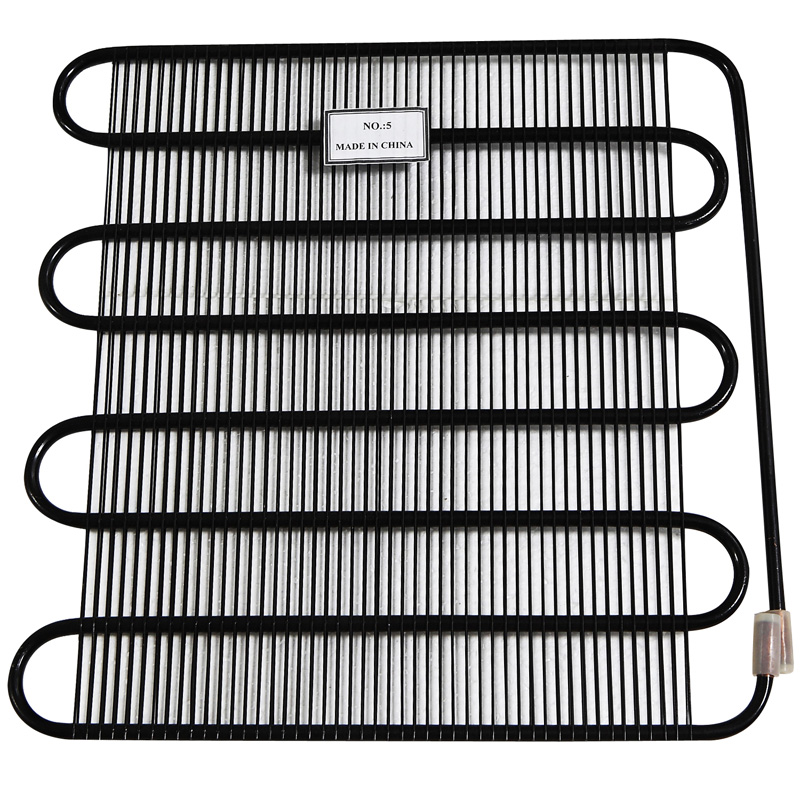
Evaluation categories depend entirely on where the coil is physically located. The mounting position dictates all installation parameters and cabinetry design rules. You cannot apply rear-mount clearance rules to a bottom-mount unit. Each design requires a specific approach to spatial planning.
Manufacturers engineer these systems with specific airflow assumptions. When builders or homeowners ignore these assumptions, the appliance suffers. Understanding the difference between static and forced-air requirements is the first step in proper appliance installation.
Condenser Location | Cooling Method | Rear Clearance | Top Clearance | Side Clearance |
|---|---|---|---|---|
Rear-Mounted | Static / Passive | 1 to 2 inches | 1 to 2 inches | 1 inch |
Bottom-Mounted | Forced-Air / Active | 0 inches (typically) | 0 inches (typically) | 0 inches (typically) |
Top-Mounted | Forced-Air / Active | 1 to 2 inches | 6 to 12 inches | 1 to 2 inches |
Freestanding units typically utilize static coils mounted on the back wall. Standard clearance metrics require 1 to 2 inches at the rear. You also need at least 1 inch of clearance at the top and sides. This spacing allows a natural thermal draft to form, pulling cool air from the floor and exhausting hot air out the top.
These units rely entirely on passive convection. Hot air naturally rises and pulls cooler air from the floor. Enclosing a home refrigerator condenser coil in tight custom cabinetry causes immediate efficiency drops. The rising hot air hits the cabinet ceiling and recirculates downward, stalling the cooling process and baking the compressor.
Built-in models usually feature bottom-mounted systems. These utilize front-breathing mechanics to manage airflow. A fan pulls fresh room air through one side of the front toe-kick grille. The air passes over the compressor and coils, then exhausts out the other side of the grille back into the room.
Clearance requirements differ drastically here. You often need zero clearance at the rear and sides. However, you face strict requirements for unobstructed front airflow. Blocking the toe-kick with decorative molding, thick rugs, or accumulated pet hair will instantly suffocate the system and trigger a high-pressure fault.
High-capacity units often place the mechanical components on top of the cabinet. This keeps the condenser away from floor dust and pet hair. However, it introduces different spatial challenges. Heat naturally rises, so the exhaust air must have a clear upward path to dissipate properly.
These models require significant top clearance. You generally need 6 to 12 inches of open space above the unit. This allows compressor and condenser heat to vent upward without hitting a low ceiling or soffit. Restricting this top space forces hot air back down into the intake fan, creating a destructive thermal loop.
Buyers must balance aesthetic desires with mechanical realities. Flush, built-in looks are popular but challenge thermodynamic limits. You must evaluate how specific coil architectures handle restricted airflow. Upgrading to advanced components can help mitigate tight spaces, but physics still apply.
When designing a kitchen layout, the appliance specifications must dictate the cabinetry dimensions, not the other way around. Forcing a large unit into a small alcove always results in poor performance. Selecting the right condenser type for your specific spatial constraints is critical.
High-density fin designs increase the total surface area available for heat rejection. This allows engineers to build smaller, more compact coils. However, dense fins create significant air resistance. You need more aggressive, high-static fan speeds to push air through this tight spacing effectively.
There is a distinct trade-off between compact size and maintenance needs. A highly compact energy efficient fridge condenser is highly susceptible to dust accumulation. Dust bridges the narrow gaps between dense fins quickly. This blocks airflow and negates the efficiency gains of the advanced architecture, requiring more frequent cleaning.
Modern condensers often equip variable-speed fans. These fans adjust airflow dynamically based on ambient temperature sensors and internal heat loads. If the kitchen gets hot, the fan ramps up RPMs to maintain the necessary Delta T across the coil surface.
These smart systems help mitigate minor clearance deficits. They push more air when passive convection fails. However, they still operate within strict physical limits. A variable-speed fan cannot fix a completely sealed enclosure with zero exhaust routing. The hot air must have a place to go.
Ignoring clearance specs during installation leads to severe real-world consequences. Installers must engineer solutions when architectural plans conflict with appliance requirements. Proper mitigation prevents premature hardware failure and keeps the system running efficiently.
Field technicians frequently encounter burned-out compressors caused entirely by poor installation practices. Educating builders and cabinet makers on airflow requirements is a necessary step in preventing these costly failures. You can often fix a bad installation with a few simple modifications to the surrounding enclosure.
Inadequate clearance triggers a predictable cascade of mechanical failures. First, head pressure elevates beyond design parameters. Next, the compressor begins overheating due to the lack of cooling vapor returning to it. The system enters continuous run cycles trying to reach the setpoint, driving up energy costs.
Eventually, the compressor's thermal overload switch trips. Repeated tripping degrades the compressor windings. Ultimately, the compressor burns out completely, requiring an expensive sealed system repair. Furthermore, operating a unit without the manufacturer's specified minimum clearance instantly voids the warranty.
Architectural solutions exist for tight custom cabinetry. You can install louvered ventilation grilles in the upper cabinet doors or side panels to allow heat to escape. Utilizing active exhaust fans within the enclosure helps pull hot air out mechanically. For top-venting units, routing hidden ducting to the room exterior solves heat trapping.
Routine maintenance becomes critical in tight spaces. Clearance spaces quickly become dust traps. You must vacuum the coils and the surrounding enclosure frequently. Dust acts as an insulator, further reducing effective airflow and compounding clearance issues. Keeping the area clean is the easiest way to maintain efficiency.
Review the manufacturer specification sheet to determine the exact minimum air clearance required for your specific refrigerator model before building cabinetry.
Measure the physical space in your installation alcove to ensure it accommodates the required rear, top, and side clearances for proper heat dissipation.
Select a front-breathing, bottom-mounted unit if your kitchen design requires a flush, built-in look with zero side or rear clearance.
Install louvered grilles or active exhaust fans in custom enclosures to provide an escape route for trapped hot air.
Schedule routine maintenance to vacuum dust and debris from the condenser coils, ensuring airflow remains unobstructed over the life of the appliance.
A: Heat cannot dissipate, causing the compressor to run continuously, spiking energy bills, and eventually leading to system failure due to thermal overload.
A: Generally, freestanding units require 1-2 inches at the back, 1 inch on the sides, and 1-2 inches on top, though front-breathing built-ins require zero side/back clearance.
A: It expels latent heat absorbed from the evaporator and superheat generated by the compressor, cooling the gaseous refrigerant under high pressure until it condenses into a liquid state.
A: While forced air improves convection, a fan cannot overcome a completely sealed enclosure; the hot air must still have an exhaust path to leave the space.
A: Even highly efficient systems must obey thermodynamics; they still transfer latent heat from the interior to the exterior, requiring ambient air to absorb that heat.
A: Dust acts as an insulator on the coils and fins, artificially reducing the effective clearance and blocking the airflow necessary for heat rejection.
A: The physics are the same, but the airflow path differs; bottom mounts use fans to pull air in and push it out the front, whereas rear mounts often rely on passive upward heat drafts.


